• السلام عليكم ورحمة الله

      The following software is required to download & install before beginning lessons:

      The Muhaddith Arabic-English Dictionary:

      Dictionary Program Files

      How to Install

      The Shamela Library:

      Shamela Download Link 1

      Follow the instructions in "How to Install" carefully to ensure that the correct settings are adjusted on your computer before installing the software.

      The Arabic grammar text utilized is:

      Grammar Text PDF

      The preferred Arabic-English dictionary is:

      Dictionary PDF

      Ejtal Online has a digital version of this dictionary here:

      Ejtal Digital Mawrid

      The first sessions are dedicated to assisting with the installation of these files and the initial assessment.

      Welcome to Madrasah al-Andalus...

Site announcements

Schedule for Lessons July 2026

by System Administrator -

Beginning Monday, July 6th, the projected schedule for lessons at Madrasat ush-Shuhada online is as follows:

Mondays:

Classical Arabic Reading-Comprehension

Level I: 9-10am [UTC -6]

Level II: 10-11am [UTC -6]

Tuesdays:

Sound Islamic Aqidah

Level I: 9-10am [UTC -6]

Level II: 10-11am [UTC -6]

Fiqh

Level I: 11am-12pm [UTC -6]

Wednesdays:

Quranic Sciences

Level I: 9-10am [UTC -6]

Level II: 10-11am [UTC -6]

Fiqh

Level II: 11am-12pm [UTC -6]

Thursdays:

Hadith Sciences

Level I: 9-10am [UTC -6]

Level II: 10-11am [UTC -6]

Available courses

Wednesdays: 10-11am [UTC -6]

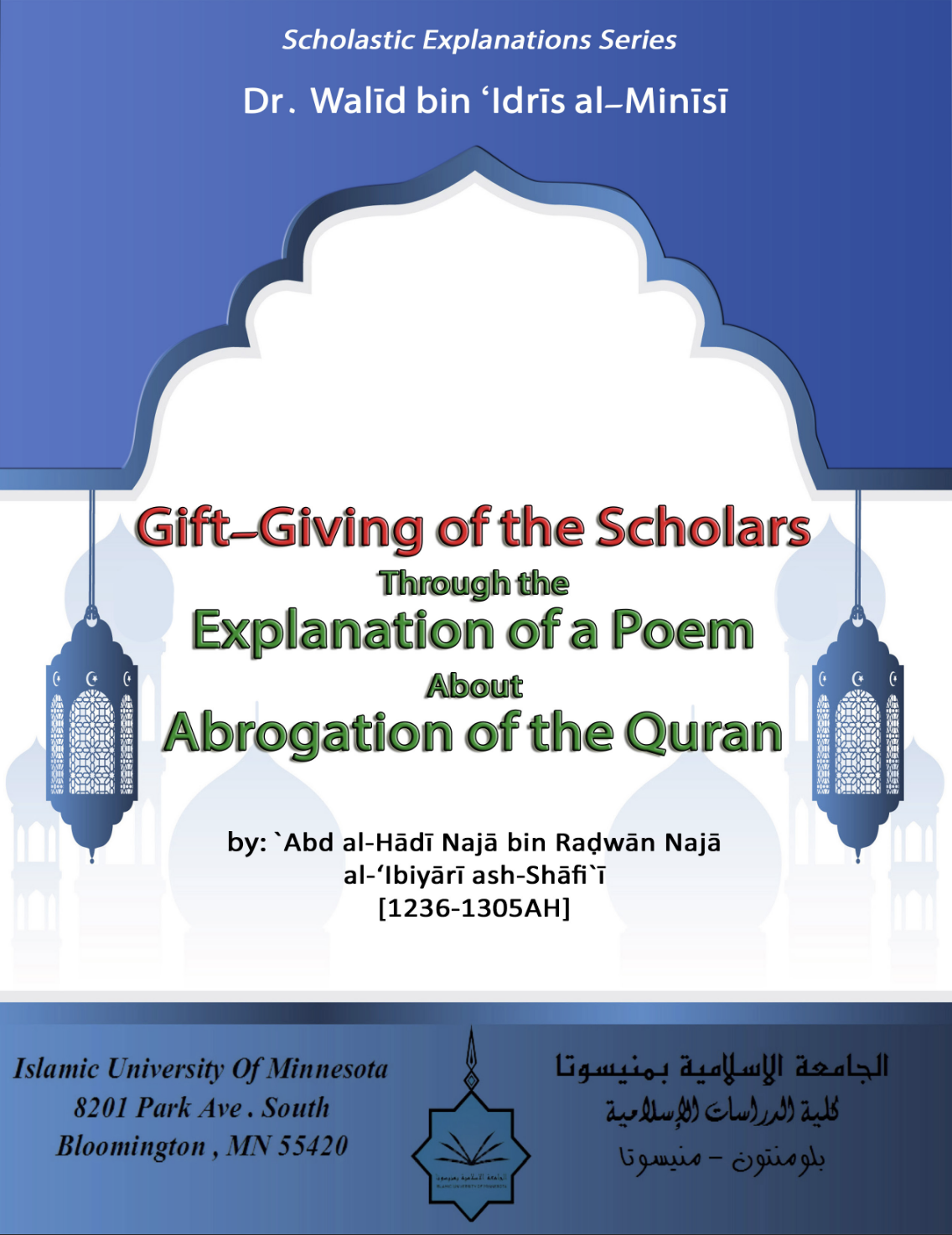
Gift-Giving of the Scholars: Abrogation in the Quran

The study of an English-Arabic translation of the 20-line poem by al-Hafiz ash-Shaykh al-Ibiyari containing references to all abrogated verses in the Quran. Also, contains an English translation for the explanation of the poem by Shaykh Dr. Walid bin Idris al-Meneese and an English-Arabic translation of the 10-line poem by al-Imam as-Suyuti.

This course is based on the original translation by the teacher of this course, Shaykh Abu Najm.

Wednesdays: 9-10am [UTC -6]

Principles of Quranic Exegesis

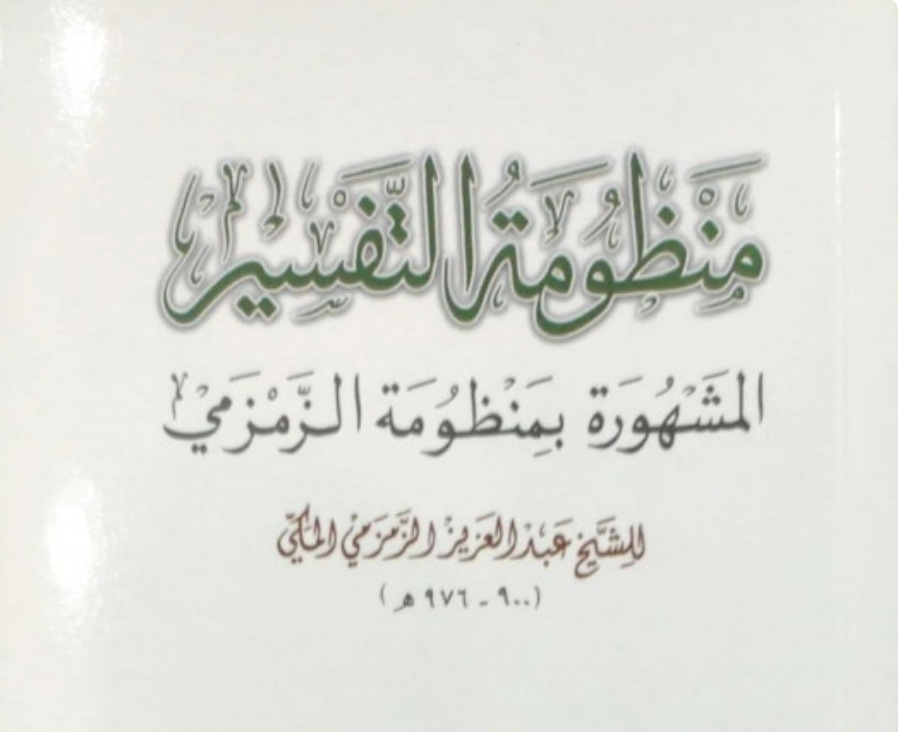
Manzumat az-Zamzami (also known as Al-Manzhumah al-Zamzamiyyah or Manzumat at-Tafsir) is a celebrated didactic poem written by the 16th-century scholar Abd al-Aziz ibn Muhammad al-Zamzami al-Makki (d. 1569). It is an essential foundational text that condenses the sciences of the Quran and the principles of exegesis (Uloom al-Quran and Usool at-Tafsir) into rhythmic verse.
  • The Source Material: Imam az-Zamzami based his poem on the Quranic sciences section of al-Nuqayah by the famous Imam al-Suyuti.
  • Structure and Content: The poem consists of 158 couplets covering 55 specific topics spanning six major modules. These include the rules of revelation, the gathering and transmission of the Quran, linguistic nuances, and the rulings of exegesis.
  • Significance: It serves as an excellent, concise memorization tool for students of Islamic knowledge. It has historically been taught in traditional institutions across the Arab and Southeast Asian Muslim world, as well as the later Ottoman Empire.\

We will be studying this text through an original, rhyming translation into English performed by the teacher of this course.

The explanations of Shaykh Walid al-Meneesi, Shaykh al-Usaymi, and Shaykh al-Khudayr will be utilized throughout the course.

Tuesdays: 9-10am [UTC -6]

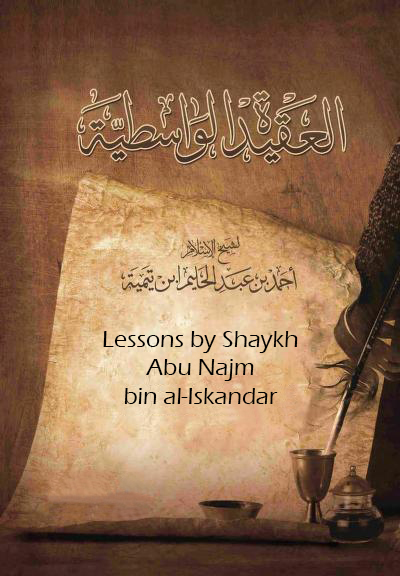
Select statements of creed from the Salaf.

A study of Ibn Taymiyyah's al-`Aqīdat al-Wāsiṭiyyah.

‘Ijāzah upon completion.

Arabic Reading Comprehension for Advanced Students

Arabic Reading Comprehension for Intermediate Students

Arabic Level II will have live lessons 10-11am Mondays.

Arabic Reading Comprehension Level I

This course is designed to help participants practice their application of rules related to Arabic grammar, morphology, and syntax.

Arabic Level I live lessons will be 9-10am Mondays.

Al-Suyuti's Alfiyya on Hadith (also known as Nazm al-Durar fi 'Ilm al-Athar) is a famous poetic treatise written by Imam Jalal al-Din al-Suyuti to summarize and explain the science of Hadith terminology and its divisions.

This Alfiyya is considered one of the most important scholarly texts memorized by students of Hadith due to the fame of its author and the ease and fluency of its language.

The science of Hadith terminology (which is the science by which the status of the narrator and the narrated material is determined in terms of acceptance or rejection).

The poem consists of 970 verses (it has been said that it slightly exceeds this, reaching or approaching 1,000). It is composed in the Rajaz meter (which is the easiest meter for memorization and scholarly composition).

It is a summary of Ibn al-Salah's "Ulum al-Hadith" (Sciences of Hadith), while adding important benefits and additions to it. It is characterized by clear words and an easy style that helps the student memorize quickly. It gathers the many divisions and types of Hadith (such as Sahih, Hasan, Da'if, Mursal, and Mawdu') in one place.

We will study the text through an English translation by the teacher of this course.

Thursdays: 10-11am [UTC -6]
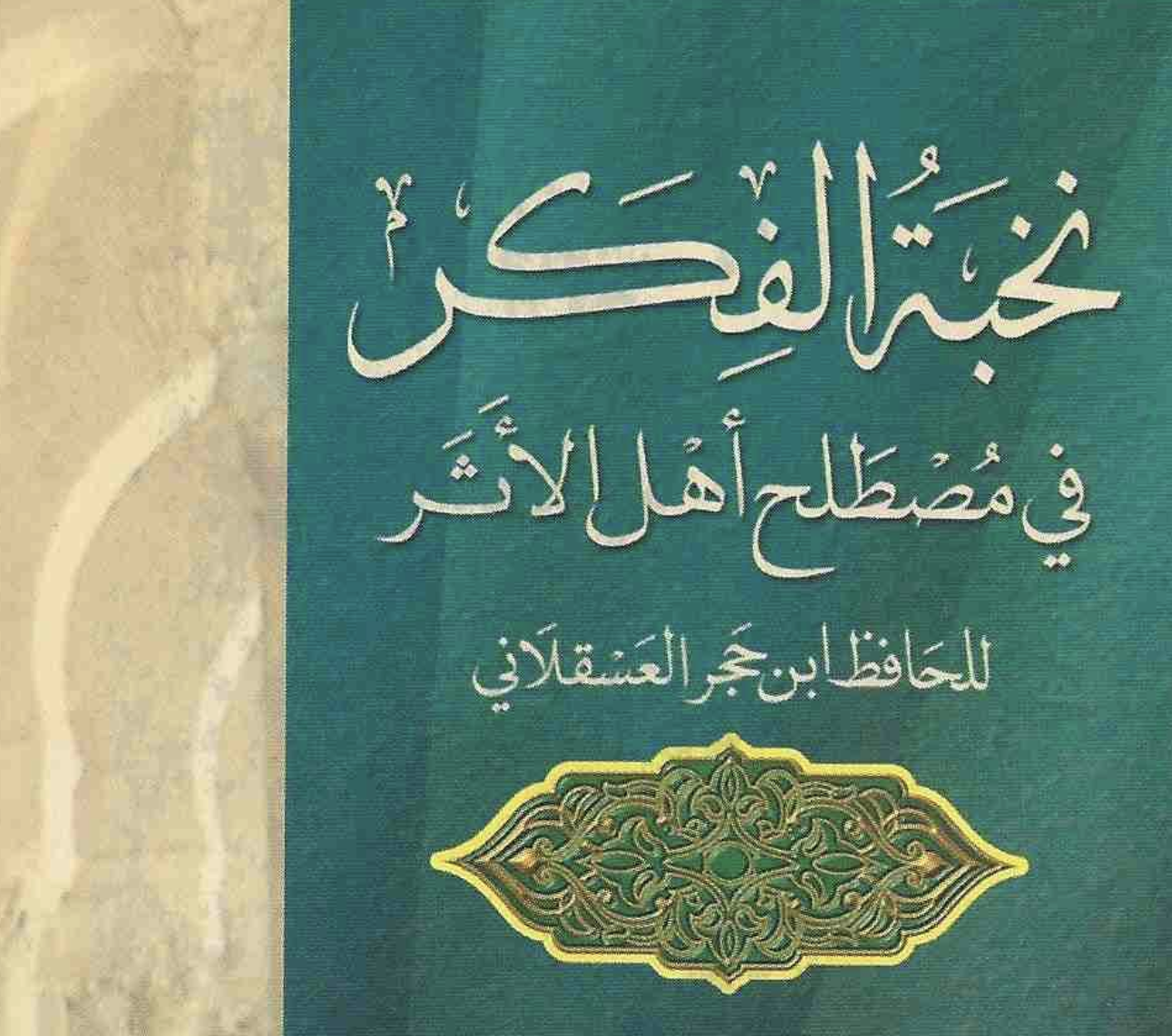
Nukhbat al-Fikar is a highly famous textbook on Hadith terminology (Mustalah al-Hadith) written by the giant of Islamic scholarship, Hafiz Ibn Hajar al-Asqalani, in the 15th century. It is a very concise primer that maps out the entire field of Hadith science by grouping narrations based on how they were passed down and how reliable they are.
Because the original text is so dense and packed with information, Ibn Hajar later wrote his own famous explanation of it called Nuzhat al-Nazar.

Core Framework of the Book

The book organizes Hadith terminology into a logical flow based on several main concepts:
 
  • The Chains of Transmission (Turuq): It divides Hadiths by how many paths or chains they have. A Hadith passed down by so many people that it is impossible for them to have agreed on a lie is called Mutawatir. If it does not reach that massive level, it is called Ahad (isolated).
  • The Levels of Authenticity: It classifies these Ahad narrations into Sahih (completely authentic) and Hasan (good/acceptable) based on the accuracy, memory, and continuous connection of the narrators.
  • The Causes of Rejection: It explains why a Hadith might be rejected (Da'if / weak). This happens either due to a missing link in the chain (like Mursal or Munqati') or a problem with a narrator's honesty, memory, or beliefs.
  • Textual Contradictions: It looks at how texts compare to one another. For example, if a reliable narrator contradicts someone even more reliable, it is called Shadhdh (abnormal).

Comparison: Al-Bayquniyyah vs. Nukhbat al-Fikar

While both books are entry-level texts, they are structured differently for students:
Feature Al-Bayquniyyah Nukhbat al-Fikar
Format Rhythmic poem (34 lines) Short prose text
Focus Easy memorization of basic terms Strict logical categorization
Depth Introductory definitions Comprehensive, structured overview
We will study the full Arabic text alongside its English translation through an English translation of the book by the teacher of this course.
Thursdays: 9-10am [UTC -6]
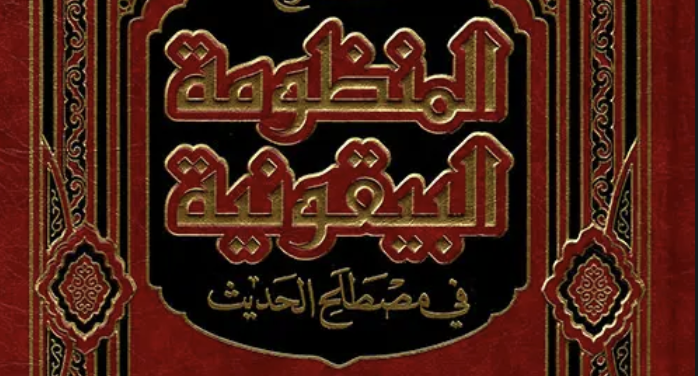
Al-Bayquniyyah is a famous 34-line poem that introduces students to the science of Hadith terminology (Mustalah al-Hadith). Composed by the 11th-century scholar Umar ibn Muhammad al-Bayquni before 1080 AH, it serves as a foundational beginner's primer. It helps students memorize the key definitions used to separate authentic sayings of the Prophet Muhammad from weak or fabricated ones.
Even though it is very short, the poem names and defines over 30 different categories of Hadiths. Here are some of the primary terms it explains:
  • Sahih (Sound): A Hadith with a continuous chain of reliable narrators that has no hidden flaws or contradictions.
  • Hasan (Good): A Hadith that is reliable but its narrators have slightly weaker memories compared to those in a Sahih chain.
  • Da'if (Weak): A narration that lacks the qualities needed to be Sahih or Hasan.
  • Marfu' (Elevated): A statement or action directly attributed to the Prophet Muhammad.
  • Maqtu' (Severed): A statement traced back only to a Successor (the generation after the Prophet's companions).
  • Mawdoo' (Fabricated): A completely made-up lie falsely attributed to the Prophet.
Why It Is Important
The poem uses a rhythmic poetic meter, making it very easy for students to memorize. In Islamic scholarship, memorizing Al-Bayquniyyah is often the very first step a student takes before moving on to advanced textbooks like Nukhbat al-Fikr.
We will use the translation for the poem performed by a student of the teacher of this course, Dr. Abu Zayd.

Muslims in Dar al-Harb: Hadith Studies

This course explores the role of Muslims in Dar al-Harb through the study of Quranic sciences, Hadith sciences, & Fiqh.

The schedule for lessons is M, W, Th 8-10am CST no DST, and T,F 8-9am.

M-F, 8-9am is for Arabic Reading Comprehension.

M,W,Th 9-10am is for lectures on the role of Muslims in Dar al-Harb.

Lessons are provided by voluntary donation.